Friday, August 14, 2020

From England to the US: Interview with Rianne Part I

Rianne
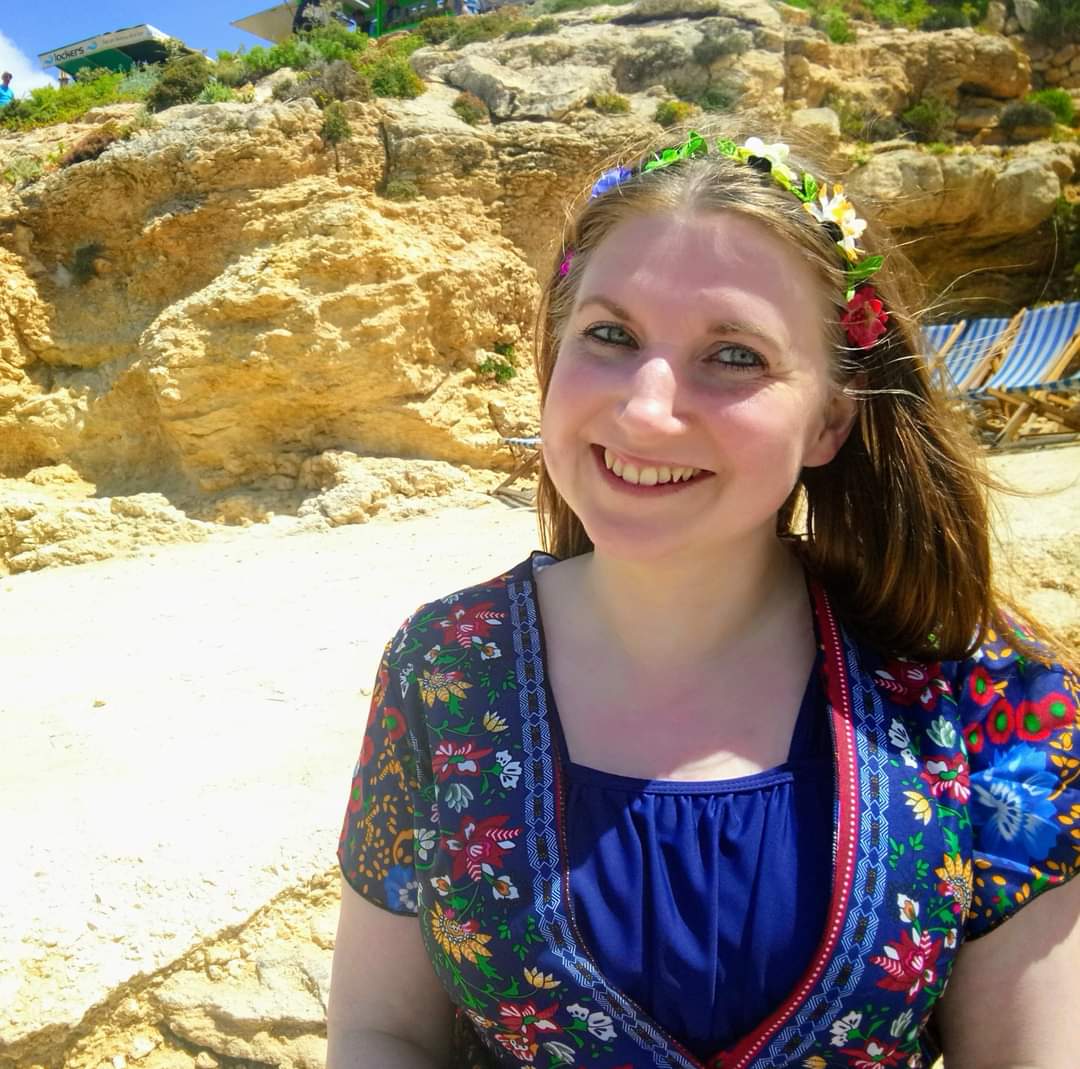
I had the pleasure of interviewing Rianne, a chocoholic and lover of travel who often gets "itchy feet" as the expression goes. Every one of her trips must include trying the best dessert in the area. She lives in England in the city of Southampton, famous for being the port city from which the Titanic departed. She was visiting Los Angeles last summer and stayed in the same room as me in the Walk of Fame hostel on Hollywood Boulevard. In our chat, she shares a great deal about her travels on the West Coast and how it compares to her home country.


Mariya: Can you share a bit about what brought you to Los Angeles last summer?


Rianne: I'm quite the movie and TV program addict. That's why a lot of places I go are normally places I've seen on TV or in a movie somewhere. So that's why I look up where they filmed something and I say, "OK, I can go there and there when I'm in this city." 

[LA is] the ideal place to go when you're a bit of a movie buff because it was fascinating for me to see soooo many places there that I had seen on TV, and also going to a couple of the studios. I got to see the magic of how they put everything together. 

M: What did you enjoy the most about your trip? 


R: Do you mean overall or specifically Los Angeles?


M: We could talk about both!


R: Overall, it would be catching up with a lot of my friends who I hadn't seen in a long time. They're people that I've met through travel. I realized there were quite a few on the West Coast, so that's why I decided to do that route when I went. Then obviously making a lot of new friends, like you, along the way, which was really nice!


Something else that I enjoy doing that I forgot to say was going on walks and hikes, so that was a big part of my trip as well. Not when it was too hot! That's why I didn't get to do the hike to the Hollywood sign; I really wanted to do that.


M: It was really hot when we went, I have to say.


R: I would like to do that, so I definitely want to go back to do that. Well, it's LA so it's always going to be warm, but when it's cooler in the day. When I went to Runyon Canyon, about an hour or two before sunset and that was perfect. It was just nice and refreshing when I went.


Other parts of LA that I liked: obviously the studios. Oh, Hugh Jackman! I got to see him when I went to the Hollywood Bowl, which was amazing. That was one of my favorite bits. I did that one as a YOLO thing. We weren't far where we were staying from the Hollywood Bowl, were we? It was like a 10-15 minute walk. The night before I went, I walked up and I was just planning to listen, and when I could hear him singing that night, I was like, "I need to get a ticket." So I just went to the ticket office and was like, "Do you have any tickets for tomorrow?" and then I just booked one. I've never done that before. I'm very organized when I go places. I have everything planned out and scheduled. So that was a "treat yourself" moment. I'm so glad I did it! He is worth every penny! He's brilliant.


Oh, and one of my favorite days was my last day with you guys! That was like the perfect last day. It was really good, especially ending with the gig. That was fun!


M: Did you find that coming to the US was a culture shock?


R: I don't think it is because I feel like in some ways we are quite similar as countries. I feel like of all the countries in the world, America and the UK are kind of "best buddies."


M: Well, yes and no.


R: I don't know, because maybe we're more so with Canada. But that's what it feels like to us. And because I had been to America quite a few times before, so I'm more used to it.


A few things that I was kind of aware of...it's not so much culture though...I was very anxious about guns. Very, very anxious. When I was by myself, I would always be kind of looking over my shoulder and planning an escape route if the worst happened, like was there anywhere I could take cover, that kind of thing, which I would never ever think about back home.


I [also] feel like strangers are a lot more friendly in America. I don't know if that's something you find or I just came across some nice people.


M: It's hard to say. I think there are a lot of stereotypes about different parts of the US and how they act towards tourists. I think California and the West Coast in general have a more positive view where they're friendlier and more laid back. I would say there are definitely a lot of stereotypes around New York, where I'm from, that are like "they're the rudest, they're the meanest, they'll brush you off."


R: I didn't get that impression at all when I was in New York! Everyone I came across was friendly.


M: Thank you! [Laughs]


R: I think it's the opposite. In England, as a stereotype, we're thought of as being super polite, but I don't think that's the case at all. We really keep to ourselves. In America, you'll pass someone and they'll say "hi." That rarely happens in England. If someone says "hi" to us, we're like "Whoa! Why are you talking to me?" We really keep to ourselves and we're kind of stuck up.


M: You think that's true for England? Because I know that's a stereotype some people have.


R: I really do. In my experience, anyway. Maybe it's just in southern England. People from northern England tend to be friendlier. I can say that because I am from the South and we do have a big North-South divide. But I will admit, they are friendlier.


I've also noticed that there aren't really any pubs in America, mostly bars. We have some bars in the UK too, but really pubs are more homey and quaint. You can sit by a roaring fire, it's more of a family place where people go to get a pub meal. And there are over 60,000 pubs in England.


STAY TUNED FOR PARTS II AND III OF THIS INTERVIEW.


Sunday, August 9, 2020

COVID Response Argentina vs. US: Interview with Carolina Part II

In the first part of her interview, Carolina shared a bit about her Argentinian culture and language as well as how she fell in love with California. Our conversation then turned, as it inevitably does these days, to the effects of the pandemic on us and our communities. Getting a first-hand description of how different countries are handling this crisis brings to light the values inherent in each government.


Note: If you'd like to watch/listen the full interview, click here: https://www.youtube.com/watch?v=5hee0DmZU54 


Mariya: Since COVID-19, it’s obviously been much more difficult to travel, which can be hard especially for the hospitality business in which you work. I’m curious to know how has your work been affected and how has your daily life been impacted?


Carolina: The hotel that I work for is closed now. We do have a few hotels that are working with the government that are hospital hotels in case you have COVID, but if it's not dangerous for you, then maybe you can stay to quarantine at the hotel. My hotel has been closed since the end of March. Fortunately, because of the law in Argentina, they are still paying my salary and everybody's salary at the hotel. We did take a reduction in salary, but still I can afford to pay my bills. We do have a few meetings by Zoom. What we are doing is working on new ways and new protocols and standards that we are going to use when we reopen the hotel. So we do have people who are going to the department of engineering. For example, they do go to the hotel, and they are preparing some things for us for when we do go back. Let's say they put a glass in front of the desk. When you go to do check in, you have a glass between the front desk agent and you. We are working on the protocols of cleaning for the rooms and they say we are trying mix what the company tells us to do and the government. For example, when someone checks out of the room, you have to leave the room for at least 10 hours by itself and then you can go in and clean it. Something like that. Then we will see if it's rentable or not. For now, we think we can open in October.


M: OK, that's pretty soon!


C: Yes, but we've been pushing the date. I don't actually know if this is going to happen. But in August, we are going to open one of the restaurants to buy food to go and to do delivery. So some of the employees can work - probably the ones that live close to the hotel so that they don't have to use public transport. Here public transport can only be used if you work for essential jobs. So only if you work in a supermarket or in medicine. Otherwise, you cannot use public transport.


M: How do they check to make sure that only those people are using it?


C: The drivers. You have to show a permission of circulation because not everyone can work. I'm not allowed - I don't have a permit to circulate - so I can't be around the city doing nothing. When you ask for the permission online, you have to put where you work, what you do, and they match your details, so they say, "OK, you can work because you work in the hospital" for example, and then your permission will say that you work in the hospital.


M: Wow, that is very strict!


C: Yes, it is strict, but also the police stop all the cars that are traveling into the city from surrounding areas. A lot of people that work in the city come from outside of the city. That's the main problem we are having that the crossing of people are making them all contagious and spreading infection. Usually I don't go out or visit friends, but actually I have to say that I did. If I go, I go by bike. For example, the other day I went to see my brother and stayed in his apartment for 2 or 3 days, and then I came back with my bicycle, and then I was waiting to see if something happened. Like [my brother and I agreed] let's wait 15 days to check that we're both OK, and not see anyone until we know that we are both OK.


M: Yeah, that's kind of been the approach of people here. If they want to visit family or friends for home visits, they recommend quarantining 2 weeks before you go, and then just to be sure, do it again when you come back. Though people will meet outside in the park or something staying 6 feet apart or more.


And so what have you done, other than visiting your brother the one time, to keep busy, take care of yourself, and still feel connected to your friends, coworkers, and family?


C: In order for me to be mentally healthy, I have been exercising in the apartment, yoga, and I started meditating every day. I think it changed me a lot and kept me in good mental health. Also, what I do is I keep in touch with my friends with my cell phone, with my messages, sometimes we speak over a video call. And what I do is I help an old lady who lives here in this building. She is more than 65 years old. Usually when I go out to buy my groceries, I ask her if she wants me to buy her anything. Then she started asking me for other things like post a few pictures on the internet. I go to her place and she does knitting. She made gloves for me, and she made a few more things, and she said she wants to sell them. So we took a few pictures and we posted it in Marketplace on Facebook.


M: She should make an Etsy shop! Do you know what that is?


C: No, what is that?


M: It's an online shop where people sell their handmade crafts like knitting, sewing, artwork, all sorts of things. You could help her create an Etsy shop, help her come up with a name for it, you post the pictures, you post the price, and people can purchase through there. Yeah, just a suggestion if she's serious about selling her stuff. That's so nice that you help her so much!


C: Yeah, I have a lot time!


M: You're making good use of your time. My last question for you is: When it's safe to travel again, would you consider coming to the US again? If so, where would you like to go?


C: Of course, I would love to visit the United States again, but I don't know exactly where. I usually prefer to go to places I don't know so that I can experience something new. I don't think I want to go to California again even though it's my favorite state.


M: Which cities have you been to in the US?


C: I've been to Las Vegas, Indianapolis, Miami, Chicago, San Francisco, Los Angeles, and San Diego. Oh, I've also been to New York and Washington DC.


M: Oh, so you haven't been to the northeast in Boston! That should be your next trip.


C: [Laughs] Definitely!


M: Well, thank you for sharing your experience and a bit about your country.


C: Thank you! I'm really glad we met in Hollywood!

Monday, August 3, 2020

From Argentina to the US: Interview with Carolina Part I

Carolina
Little did I know that spending just a few days in the company of Carolina in what was a new city for both of us would lead me to a friendship that transcends boundaries even amidst this pandemic. She is from Buenos Aires, Argentina and works in five-star hotels. 

Mariya: What brought you to Los Angeles last summer?

Carolina: I have a friend who lived, but not anymore, in San Francisco, so I decided to go to visit her. She was working by the time I arrived to California, so I decided first to go to LA, then meet her in San Diego, then go to San Francisco with her. So I decided to go mainly to visit her, but I haven't visited the United States for many years, so I thought it was a really good option to go back and go to California again because it was the state I loved the most in the US. I love to travel and that is usually my goal is to save money just to travel around the world if I can. 

M: What did you like most about your trip?

C: I did know California from before. I found it even more exciting than what I thought it was going to be. For example, when I went to LA a few years ago, I liked it, but not that much. And then I found it very interesting. The people, I thought, were beautiful and warm, and I didn't expect that. I don't know exactly why. Actually, for my flight, which was to and from LA, I had to go back there from San Francisco in order to get my flight back to Argentina. I thought, "Maybe I'll go back one day earlier to catch my flight," but then I decided to go back five days earlier in order to visit a few more things. 

M: Wow, so it sounds like you really enjoyed LA a lot!

C: Yes, and I didn't expect that at all! People told me about San Francisco and that San Diego was beautiful and I would fall in love with [it], and I did, but I didn't expect that LA was going to be that fun.

M: Did you find that coming to the US was a culture shock?

C: I guess, not that much for two reasons. One: because I had been there before. Second: I had been in Japan and Thailand, so I found that a culture shock. Still, I did find a lot of things that I think it's very different from Argentina, and sometimes I find little details that make things easier for people in the US than here. For example, I found it very interesting that you have Uber spot so that the Uber [driver] can find you. Of course! That is a good idea, but we don't have that here. Also, I don't know how to explain it, but every time I open a snack, this is very silly, but it's easier than the snacks in Argentina. 

M: Interesting! I would never have thought about that! Did you find that there was anything in particular that was similar to Argentinian culture?

C: I did find that the people, when you talk to them, and even when I sometimes don't understand everything because of the language, I still found that the kinds of jokes and humor were the same. Sometimes I didn't understand what they were saying, but I did understand when they were laughing between them it's the same as us in Argentina. 

You know how when you touch someone's shoulder but then you run around the person from the other side? I saw this a few times and it's the same in my country too. We do that to each other. It felt like warm, like brothers!

M: So similar sense of humor. Nice! And I'm curious to know more about Argentina because I've never been there. What is something about your country that you think would be surprising or intriguing to people?

C: There are a few tourist spots that I was thinking about. For example, in the north of the country we have Iguazu Falls that we share the [water]falls with Brazil. Those falls are 100% natural. I was reading about the different falls you can find in the world, and I'm not sure if this is the only one that we have, but other falls might have concrete [structures] to keep them flowing. The ones that we have are 100% natural.

Another thing that is interesting is that in the south we have a place we call "The End of the World" because when you reach Ushuaia, which is the last city that we have, it's kind of the end of the world because there is nothing else more south. That's a beautiful place, and it's completely different to the north. People are also completely different, even the way they look. In the north, people are shorter. 

M: Huh! Really? It's that noticeable that you would go south after being in the north and see that the people were much taller?

C: Yes.

M: I really want to go there now when it's safe to travel again.

C: But first you have to make a stop in Buenos Aires!

M: Yes, definitely! I know we've also talked about Argentinian Spanish. Could you share some of the unique modern day aspects of it?

C: Since the Spanish language is not an inclusive language, usually the plural is a male word, let's say. For example, if we have a meeting and even if you have more women than men, and you ask, "Is everybody here?" "Estamos todos?" You would say "todos" instead of "todas." Even if it's only one man! Since feminism has become more popular so has the "lenguaje inclusivo." Women were trying to depart from the language also. 

A variation of that is we have changed a few words as well. We have a few words that are male that have always been like that. Let's say "cuerpo," body. It's always "cuerpo" no matter if it's a male or female body. So we women decided to call it "cuerpa." That's something that's very new, and probably if you go outside Buenos Aires or if you go to a small town, they probably won't know what you are talking about. I think what we are trying to do is to show men that we can be part of the language as well. In Buenos Aires we have the Obelisco tower, which is like our Eiffel Tower, but much smaller. If you go to the center, to downtown Buenos Aires, you must take a picture with the Obelisco. That's the name, Obelisco, but sometimes we say, "We will meet at the Obelisca." We create new female words with the words that already exist.  

M: That's really cool! Is this something that only women will do? Or have some men also taken to this language?

C: Usually it's women and maybe the LGBT community will use it too...and sometimes a few men to be warm. Actually, another thing we talked about I wasn't sure if it was even international was the "e" ending.

M: Yeah, like the pronoun "elle" instead of "ella" or "el." 

C: Exactly! Because you don't know if a person can feel as a male, female, or not any of those. So you don't have to talk about them as a woman or a man.

M: Yeah, maybe they're non-binary.

C: Exactly. So we start talking with the "e" instead of "ella" or "el."  For example, our president the other day was talking, when they referred to everybody, he said, "todos, todas, y todes." It doesn't matter who you feel you are, you will be included. 

M: Wow, that's awesome that he does that! Here in the US, there are some places that are very open to the LGBT community and some that are more closed off. Even when you think about using the pronoun "they/them" instead of "he/she" it causes so many problems for people. That's really cool that your president did that.

C: I think he did that because his son is from the community, so he can feel it from the inside of his own home. Otherwise I don't know if there is another president would could do something like that. 

M: That's true. It does make a difference to know somebody personally. 

C: But it did make a huge thing to talk about. If the president is saying something like that, then it's like "wow," and the LGBT community is like "yay!"

Stay tuned for Part II of the interview in which Carolina shares how the pandemic has shaped her and her city. 

Monday, July 27, 2020

One Summer Ago in the City of Angels

Since traveling this summer is an unsafe option, let me take you back to a simpler and more carefree time when I joined two of my high school friends on a trip to Los Angeles, California for a week. It was the farthest west I had ever travelled in the United States up until then, and I was excited to experience the West Coast! My friends had already booked their Airbnb, and I decided to opt for a hostel since I was joining in fairly last minute. I found one aptly named "Walk of Fame" right on Hollywood Boulevard in the middle of all the action. Hostels are great if you want something affordable and you don't plan to spend too much time in the room. It definitely caters more towards a young professionals and college student crowd. Most of the rooms contain bunk beds and each person is generally expected to put their own sheets on the bed as well as remove them at the end of the trip rather than getting regular room service the way you would in a hotel. This particular one also had a few separate rooms with regular beds available for families for a slightly higher price. 

After getting acquainted with the space and rules pertaining to it, I entered my room of 6 bunk beds to find that some of the women there already knew each other. I wasn't expecting to get to know any of them over the course of a single week in this city. However, one of the young ladies who had been staying there for some time already said hello and made an effort to get to know me. Rianne had been travelling from her home country of England around the US for a couple weeks already learning the lay of the land and meeting new people regularly. She eagerly shared stories of her travels with me both in and outside of LA. Knowing that this city was the hotspot for meeting celebrities and seeing where they lived, Rianne had done her research on where she should go to meet her favorite stars. After visiting one of the many film studios in the LA area for a tour, she shared that she had the chance to briefly meet Mandy Moore and Milo Ventimiglia who are cast members of one of her favorite shows, This Is Us. She was just gushing about them! I was also impressed with how detailed and thorough her plans were. She did not want to waste a minute of her time, and I admired that about her. 

The Walk of Fame Hostel offered free or low cost tourist trips around the city for those who were staying in the hostel, and the guide let my friends staying at another place join as well. The Griffith Observatory is a beautiful lookout point in Griffith Park in LA that also has a science museum inside the main building and a couple of old telescopes you can peek at. On the way there, we took a train and a bus, which gave us plenty of time to connect with others in the group. We started chatting with Carolina, who works in Hyatt Hotels in Argentina. My friend, Yaniza, is a native Spanish speaker, so they quickly bonded over their common language background. My friend, Kevin, had studied abroad for a month in Bueno Aires, so he was able to share his stories with her, too. My knowledge of Argentinian culture was limited to the language and dance of Argentinian Tango, which for those who are familiar with ballroom lingo, is distinctly different from International or American Tango. Over the course of that excursion, we established ourselves as acquaintances with Carolina and hoped to see her again. 

Santa Monica Pier
(Left to Right: Carolina, Rianne, Kevin, Yaniza, me)

Rianne and Carolina both joined me for breakfast (independently of each other) in the hostel the day following the Griffith Observatory trip. Yaniza, Kevin, and I had planned a beach day seeing as this is California and the summertime. I invited them both to accompany us, and they were happy to do so! We started out our walk down Hollywood Blvd. taking pictures of us next to some of our favorite stars, and after some time realized that the restaurant where we agreed to meet my friends was a short distance by car, but not on foot. We quickly hopped in a Lyft and made our way to an early lunch/brunch at a place called "Egg Sl*t." Yes, that really was the name of the place. Then we ordered another car that got us to the Santa Monica beach where the driver shared that he is from the middle east leading us to all reveal the various countries we each come from - we were an international car! At the beach, I learned from Carolina the tradition of drinking maté, a strongly caffeinated drink that is the national beverage of Argentina. We talked about our lives, our beliefs, politics, and so much more. There is something so freeing about sharing deep and meaningful conversations with acquaintances that you meet in a new place. 

Celebrating after Yaniza's show

Later that day, I let the ladies know about the main reason we came to LA in the first place. Yaniza is a singer-songwriter who was on tour, and she had a performance scheduled for that same day in a restaurant. After getting back to the hostel and changing, Rianne and Carolina accompanied me to the restaurant before the show for dinner. We then watched Yaniza's spectacular performance and Rianne was so moved that she bought Yaniza's CD that she had for sale. 

After that day, one by one we said goodbye to one another as each departed for different destinations: Yaniza and Kevin went to the next tour destination in Nashville, Tennessee; Rianne and Carolina were off to other parts of the country. Meanwhile, I flew back home to Boston. We vowed to stay in touch after the trip through WhatsApp. Here we are one year later continuing to share insights about our lives especially in the era of COVID-19, politics, language, and more. I look forward to the day where we can travel and be in each others' company again.  

Note: Real names were used with permission.

Saturday, July 18, 2020

Ghana: Interview with Kankam on Pen Pal Exchanges

Kankam Mensah Felix
Now that you've heard my perspective on my exchange with the classroom in Ghana, I'd like to share that of the Ghanaian teacher, Kankam Mensah Felix. I had the opportunity to speak with him about his experience as a facilitator of global pen pal exchanges and the impact it has had on him and his students. He works at the Lillian and Abraham Memorial Academy situated in a suburb of Accra, the capital city of Ghana. The suburb is known as Mallam. His role in the school is three-fold: he is the international relations officer, librarian, and he also teaches the Ghanaian language of Asante Twi. Read on to learn more about what Kankam is doing to improve education for his students and connect with other teachers. 

Note: If you'd like to listen/watch the interview, click here: https://youtu.be/acXH9fUzoJI


Q: Can you share how English and other languages are taught at your school?


A: Thank you so much for the great question. In Ghana, English happens to be, let's say, our first language. So students in Ghana start learning English and French. But French is not mostly taught in more schools. English is taught from nursery to grade 9 and to the university level. It's treated the same way as mathematics, social studies, and science in our classrooms. So depending upon the timetables or the schedule for the day, a class can have five periods in a week. For instance, on Monday, students will always have an English teacher going into the class.


So we have the three languages: English, French, and Ghanaian languages. The Ghanaian languages are Asante Twi and Ga. Everyone is expected to learn English and French. When it comes to Asante Twi, that is for the people who are natives of the Asante Empire or Asante Kingdom. These are the people from Kumasi. The Ga’s from greater Accra speak the Ga Language. Accra happens to be a mixed culture. We happen to have people migrating to Accra, so we have different people from all parts of Ghana. So we give them these languages to select from their own choice.


Q: Have you ever done a pen pal exchange before with your students? If so, what was that experience like? If not, what made you decide to start this year?


A: Thank you so much. When I came to the school, I introduced the pen pal exchange to my students because I used to work with the British Council way back in Kumasi, and one of my motivations to establish this programming in the school was to give students the exposure to learn what was happening outside of the classroom and outside our country. I tried to search for schools around the world and we would do a collaborative project together. We joined an organization called Yo-Ghana (exchanges for transformation). With this organization, the students were able to connect with schools in Oregon, United States.Then we also tried to talk to schools in France, in the UK, in Argentina, in Uganda, in the United States. This experience tried to broaden the scope of both the teachers that were part of the project and the students to have a sense of togetherness - a sense of feeling that "OK, we are learning here in Ghana, we have something similar with what others are learning, around the world." It gave my students, myself, and the teachers on the platform the confidence level that we are not doing something wrong. We are also doing something that the whole world is doing. It boosted our students' level of writing skills, speaking skills because there were times when we would do video recordings of some presentations that had so much impact on our students.


Q: What were your students’ initial reactions to starting the pen pal exchange with my class in the US?


A: They were so happy because one of the biggest challenges for us two years ago was access to computers and the internet. But with the help of the Helping Africa Foundation and the Friends of Yamoransa, we were able to get a 35-seater computer lab. But still we have challenges with internet connectivity. So what I mostly do is a paper exchange. My students would write, then I would scan them, and send them to the recipient teacher. They do the same thing, back and forth. So our experience with your students was so exciting! And then we were not lucky when COVID-19 struck, and we had to go back home. Then communicating with students became a challenge for me and them. But we are eager that when COVID-19 goes down, we will be able to continue our connection with you and your students.


M: I can imagine that this would make things much more difficult.


Q: So since this was a little different that they were recording Flipgrid videos rather than writing letters, how did you prepare them for the Flipgrid videos?


A: One of the things I always told them, especially when it comes to the video, is that the whole world is going to watch you. Whatever you are going to say should be very important. You have to stick to the instructions that the teacher or instructor gives. Don't go outside the box. Try to be perfect. Give the best answer you can give. Have the confidence, and speak and share your ideas because your voice means a lot to us in the world.


Before introducing Flipgrid to them, I shared a story of Malala with them. This is a young girl who tried to advocate for girls' education. We saw how powerful she was, how strong she was standing in front of delegates of awards and all sorts of platforms. With that video of Malala, it gave them the spirit to also pick up the phone to also share their messages on Flipgrid. [Note: Students in Kankam's class recorded their videos using his phone and later uploaded them to Flipgrid for my students to see.]


Q: How was ePals introduced to them? Especially since typing on a computer is very different from writing by hand.


A: We are moving away from the old, traditional way of learning to the new digital way. So one of the introductions was I told my class that we can't always use paper to write letters. The time has come where we have phones, computers, and tablets. So let's engage ourselves. We can't type as fast we can, but when we keep practicing, one day we will be typing so fast that we will be able to give our friends good information. 


My students also love the ePals platform because the teacher can moderate the incoming and outgoing messages unlike the normal email services that we can use. ePals happens to be one of the places my students love so much. I think that the biggest challenge for us is when they go to the house, most of them don't have access to computers. Then those who also have computers, don't have access to the internet. That is the challenge in communication for us on ePals and other things that we do. 


Q: Did you hear any feedback from students about this exchange before they left the school? If so, what did they say?


A: Yes. Most of my students loved writing and making friends and sharing ideas. Those students gave me the motivation to do the things that I do. One student even told me, "We are going to miss our friends." I said, "OK. We are going to lose them with a distance, but we are not going to lose our connection with them. So I'm going to try to build my connection with a teacher." And I know that when all things work perfect for us, we will be able to connect back to them again. 


M: Yeah, I really would like to keep the exchange going. 


Q: Were students’ families involved in helping students write the letters at all?


A: Yes. Not all of them, but a few of them whose experiences are mostly interested in what I do and they are educated, and they want their kids to get exposure. Some parents don't give so much interest. Like in the United States maybe you have to ask permission from the parents to do stuff. Over here we just do things like the normal type like bring the program to the school. The headmaster or the board agrees to it. We hardly seek the consent of parents to do anything we do here in Ghana. 


M: Yes, that's very different here in the US. If we take students on a field trip or plan to make any changes, parents always need to know. It's interesting that you don't do that there.


K: It's something that is good that I do. I try to design a template that whenever I'm doing a program, I tell the students, "Give it to your parents for them to be aware of the things we are doing in the school." It's something that I learned from my colleagues, especially my colleagues in the United States of America. 


M: That's why I think these exchanges are so useful because you take the best from different cultures in order to improve yourself and your school.


Q: Given that the pandemic cut our time in the school building short, what are you doing to keep students engaged in this exchange from home?


A: It's so sad that my school has not engaged our students during this pandemic yet. But one thing that I proposed to the administrators of our school is the use of Zoom, or Google Classroom, or Edmodo, and then Flipgrid that we can use these platforms to engage our students. But the challenge comes with the lack of the tools, that is the computers, tablet, phone, and access to the internet, so we are still trying to figure out [what to do]. There are some schools that are of higher grade like, I don't know, the graduate schools that are doing that. But in my school we are not engaging the students now.


One of the things that a few teachers, like myself, do is we call some of the parents just to check on how their kids are doing, if they are reading on their own. But to engage them on a learning platform, we are not doing that yet.


M: I wonder if it's possible that when the number of coronavirus cases goes down, if it would be possible for teachers to meet with small groups of students outside somewhere, and see each other, and you can teach them that way in smaller classes around different parts of Mallam or different parts of Accra.


K: Yes, one key thing is the government doesn't instruct us that we should go back to school. And if you start doing any sort of engagement with students, and a student gets COVID-19, we will be held responsible. So we are still waiting for the COVID-19 cases to drop down. One thing that I've designed that when we go back to the classroom, the first months I am going to introduce all of these platforms to my school. That is very important that we know how to use all of these platforms so that we can engage with them. That is one thing I believe that when we go back to the classroom, as teachers, we need to do - to introduce our students to the virtual platforms so that in case we experience any COVID again, or any pandemic again, we are familiar with the tools and we can use them. Even though we will have some little challenge with internet connectivity, even if they have the resources, the tablets or internet, how to use the platforms will be a challenge for most of them. We need to continue to give education on how to use these virtual platforms as well.


Q: What have you learned personally as a teacher about this process? Would you do this again? If so, how might you organize it differently? 


A: Thank you so much. I am always happy to connect with other educators around the world, and I'm always learning. I'm going to share this message with you: I met these two great educators. One in Australia called Joyce Bronwyn, who is the founder of Education Elevators. She has been so helpful to me, and she introduced me to a lot of educational platforms that I used to learn with her and her students. And then there's another educator from Tenafly, New Jersey from the United States called Mark Hyman. This teacher introduced me to what we call "global citizenship." So these are some great educators. I've met a lot of great educators for the past years. Gonzalo in Argentina, I've met Fabula in Argentina, I've met Michael in the US, and yourself! I've met you. So connecting with teachers, as I always say, I learn different tools of teaching, different methods of teaching, different skills of teaching, different approaches of teaching, and sometimes even personal issues. We sometimes share personal issues about things going on in our families as educators. So I'm always going to do this unless maybe I stop teaching, but I love teaching, so I'm not going to stop teaching. I'm going to continue this program because it helps me expand my level of connectivity with other people around the world.


Q: Let's say we continue this exchange next year, what might we do differently to make sure that the connection stays strong?


A: One thing that I'm going to do from my end is to make it a habit. Then I'm going to tell my school because it's like a "me and the students" program, but not a school program, so the children don't add more seriousness to it. But if it's a school program and it is part of the school, they are going to add more importance to it. That's what I'm going to do when we come back so that even though we have challenges of technology, they will give us access to the computer lab every week or every time that we need to write our messages so that the communication will keep back and forth so that there wouldn't be so much of a delay in replying back to you and other friends around the world. 


M: That's a good idea. I'm also doing this with my students. It's not a school program for us either, so it might be good for me to think about doing that to make it more a part of the culture of the school to do this sort of learning. Thank you so much for taking the time to talk to me. You really helped me think more about the importance of making these connections.


Note: The names you see are the real names of the teacher and school, and are used with permission.

Tuesday, June 23, 2020

Ghana: Beyond the Chocolate

I returned virtually to Ghana this year in the pen pal exchange I initiated with my 7th and 8th grade students. My colleague who teaches history focused on the history of chocolate at the start of the year. This opened students' eyes to the problematic labor laws that exist in the areas that are responsible for producing the world's chocolate in countries such as Mexico, the Ivory Coast, and Ghana. To accompany their study of chocolate, my students read The Bitter Side of Sweet by Tara Sullivan, a fictional story about an enslaved Malian child who works on a cacao farm in the Ivory Coast. However, I didn't want my students' takeaway about West Africa to simply be that there is a great deal of poverty and lax child labor laws that allow for slavery to occur. To expand their understanding, students participated in a culture study by looking at videos and readings written by locals and cultural experts from either Ghana, Mali, the Ivory Coast, or Burkina Faso. 

To supplement and reinforce that cultural connection, I established a relationship with a private school teacher in Ghana using the #Gridpals feature on the website Flipgrid. For those who don't know, Flipgrid is a popular teaching tool to allow for students to share their voices in a video format to respond to teacher prompts. #Gridpals is a feature of Flipgrid in which teachers can connect with each other across the world and form these virtual connections. We created a "grid," which is the equivalent of a classroom and acted as "co-pilots" of that class, which allowed my American and his Ghanaian classes to have access to the same prompt and each others' videos. The teacher from Ghana and I worked to pair our students one to one based on common interests (as much as possible), and some of my students doubled up given that our class sizes were quite different. For his roughly 30+ student class, I had 22 total (which normally is split between two classes of 11 students). 

Given that English is one of Ghana's official languages, this made the exchange of information much easier in the group. With countries like Mali or the Ivory Coast, my students would have needed to know French or one of the many African languages spoken in the region. My students were so excited to record videos of themselves sharing their interests and ask questions about their Ghanaian ePals. They got to be silly and authentic in a classroom setting in a way that they don't always get to be. Asking about the weather in Ghana seemed to be the most popular question. Do I sense a science learning opportunity here? Yes! If only I had capitalized on it sooner. I know as I continue to do more of these pen pal exchanges, I will get better at making them progressively more interdisciplinary. 

After an introductory video, students were asked to discuss what life at school is like. It's always hard to sound excited about something that is a standard routine, so I needed to encourage them to share things like their schedule, information about the projects they've been doing, and extracurricular activities. My students went into varying degrees of depth. On the Ghanaian end, students faced the challenge of needing to share a lot of information in a brief amount of time since they were all using their teacher's phone to record the video. As a result, many shared similar information, but one thing that stood out to my students is just how early the Ghanaian scholars needed to arrive at school - 6:30 in the morning. They do this to clean the school in preparation for the day. It is clear that instilling a value of respect for your space is critical in this particular school.  

After this second video, it was not long before we moved to distance learning. In the case of my school, we had a virtual learning schedule that students and teachers were expected to follow. For the Ghanaian students and teachers, the situation is much more tricky. While some students were very responsive to teacher emails to continue the connection with my school, others were harder to reach. This unprecedented response to the pandemic has hit the school hard, and their school year goes until August. We continued the exchange to a lesser degree using ePals through which students wrote letters to each other rather than sending videos. As distance learning continues to unfold, both of us as fellow educators continue to reach out to one another in an attempt to keep the connection alive.

Saturday, May 23, 2020

Interview Part IV: Anara Frank on Staying Connected

The following is the final installment of Anara Frank's journey as the program coordinator of trips to Cuba. She talks here about the feedback she's received and the opportunities she's had to expand her programming to the Dominican Republic while also staying connected to Cuba in the midst of the global pandemic.

Q: What is some of the feedback you've received from both Cuban hosts and American travelers regarding your trip programing? Any that stood out to you over the years?

A: So starting with the Cuban dancers: I think that there are two really strong methodologies for dance teaching in Cuba and for dance and art programming in general. There's the line of high-level arts where people elected to be in an arts school and people who show extraordinary capability and talent, people who are being coached to develop that talent to the highest level, and that type of arts coaching is very strict and very focused on exactly how to be the best you can be. You're being given a chance to develop and represent the country at no cost, and there is a high level of expectation for your performance. Then there's also the community kind of dance and music programming, which is like "we are here for everyone." Everyone is here to have fun, everybody is here to learn. Whatever way we learn is fine, whatever way you do the steps is fine. If you look awkward it's fine, if you look beautiful it's fine, if your voice is off-key it's fine, if it's perfect it's fine, and it's all great! We're all just here loving it. It's dance! It's music! And there is a direction in that line that's all just fun and let's do it! You know? Yes, there's also the informal line, if you will, of just kind of picking things up from friends as they go along. Like a lot of people say, "I never learned salsa, I just knew how to do it. I would watch people," and they tried, you know? So I guess that would be the informal line. So there's three possible paths, but the two that are considered art because they're very divergent.

So what I would, as a dance instructor in the United States, who was bringing my students, had to look for how to develop [was] another type of instruction because I knew that most of my travelers were not coming to be the Olympic champion of Cuban salsa. But at the same time, they weren't coming to play and be like "Everything's wonderful! Whatever you're doing is wonderful, everything's great!" No, they wanted to learn. So figuring out how to create that space where you could be in the middle, where you could have fun but also be advancing and learning at the same time I think was surprising to the artists we were working with because they had come from one line or the other. We had both, but there was this strange place in the middle where people were learning a lot, but not being made to feel bad, I guess. It was like trying to find that little balance. So I think that was really surprising. I also know there is a lot of competition in Cuba amongst artists because there are only so many spots and everyone has good education in the arts. So we were looking for how to work as a collective that was non-competitive. No one was trying to take your role in the show, right? In Cuba, there are only a few spots for teachers, only a few spots for top performers, and so many amazing artists that it's really a fight to have your spot. With us, it was like we're building a collective, we're building a family. There's no fight for your spot, let's just keep having more students, and we all have a spot, we all work together. So I think those two things were very surprising and also some of the things that made them happiest. They had over time become such skilled instructors for people who weren't coming out of the Cuban system; [it] was something really important to them. They learned how to work with people from around the world and how to give feedback in such a way that their students, who were not Cuban, were developing. There was a saying, when I was going there, when I was younger, "Don't worry about it, you're not Cuban! You're never gonna dance like us, it's not in your blood." But then what do you do with that? Why do you even bother? So that's not useful instruction. So getting over that and getting to the point where we believed that it was actually possible to teach someone how to do something, and to teach them to do it very well, with positive energy, and helping them feel reinforced, and also that it was possible for us to be such a strong group that we didn't have to compete against each other, that there was something for everybody. So I feel like those are the two best feedback items that I think everyone has felt and that it has been very moving to watch as the group becomes more and more united based on those things. Those are the best things for me from the Cuban side, and then possibly what we were talking about earlier, that overcoming of prejudices, that what people imagined versus seeing the great diversity of what Americans actually are, and the ability for Americans and Cubans to build really beautiful relationships instead of the challenged relationships we tended to have. So I think those are the strong feedback items from the Cuban side.

From the side of the travelers: and I say travelers because not all travelers have been American. There have been many from all parts of the world. Some have been living in the United States with greencards, but also travelers from other countries who come with us on the trips, or who are born to other naturalized citizens. So there has been plenty of diversity of travelers. And I think some of the best feedback is, something that unites what I said earlier, the bonds that were able to be created in such a short period of time; the incredible experience of being totally surrounded by dance, music, and art in a way that you're not necessarily used to experiencing in our daily lives; being surrounded by a feeling of love and acceptance and appreciation regardless of what level you were at, regardless of how you looked that maybe people don't have in their daily lives, but many people were getting as part of being in our group when they were on the trip. A lot of love, support, and acceptance.

And I think the best part is what those things have meant for someone coming back afterwards. Like a lot of people have had the trip be kind of the spark for some other life changes. The spark for changing their physical health situation; the spark for making the decision to change into a different career path; the spark for being ready to take on relationship situations. So something about that leaving daily life and being in this environment of love, respect, acceptance, dance, music, art 24/7 kind of gives you a new outlook, maybe? A new way to look at things, and then be able to bring that back into your daily life and say, "OK, here is a change I want to make. I would like to change my daily life by bringing more positive energy, love, and acceptance to the people around me." Maybe they hadn't known how to do that before. Or I would like to change my daily life by figuring out how to have dance, music, and art around me every day, and maybe I hadn't done that before. And maybe I want to change my daily life by wondering and seeing what other types of career paths are available to me that have more meaning for me than the thing I'm doing right now that pays the bills. So I think those types of experiences create a spark for whatever is going to happen next. And so I think the best feedback that I am able to receive is the impact the trip made on my life is something really special. For me that's the best type of feedback that I could get.

Q: Given the restricted movement policies due to COVID-19, how are you maintaining that connection with your Cuban colleagues?

A: Actually, we kind of surprised ourselves! The start of COVID-19 was on the tails of extreme additional restrictions presented by the Trump administration for Cuba, many of which didn't hit the top of the news, but were being felt in drastic ways by my friends and family on the island. And so it was like we were already moving into a crisis. In the first few days of March, I think I got home on the 3rd from the Dominican Republic, and in the Dominican Republic I did not have a lot of contact with my friends and family in Cuba, and when I got home, we started to talk, and I was starting to realize the full impact of what was happening and how it was impacting them. Then, it was like the virus came, and then the realization that everything we did to earn money was being shut down. Not only were the people I really cared about were in crisis, but now I didn't even have a tool to help. I couldn't bring travelers, I couldn't even teach classes the way I normally would. There was a feeling that you know the people you love are suffering and the tools for how to help were being taken away. So there was a lot of internal struggle around that, and I felt really fortunate to be part a team that got good at solutioning [laughs] through all the years of challenges! And we said, "Wait! There is something we can do about this." Actually, for the past two weeks, we have been really actively working together to build what we had been working towards for the future, which is an online school and online learning community. It doesn't just provide instructional videos, but also virtual tours and experiences that people can connect to the feelings they had in Cuba but even from the United States. And that the artists are able to stay in touch with people even though [they] might not be able to see each other physically, we can be together in some way. And so we were developing this vision for this website, this online platform, and we had so many hours of videos and photos ready for it, and such a layout, and a plan, and a strategy for how to do it, but we had been going at baby steps as we did the trips, which is actually what's important.

We didn't think that the website would be a tool to support us for many years. We said we'll work on this slowly for the future. And, well, it's been the only thing we could do [laughs]! So very quickly the artists in all of the countries, in the Dominican Republic and Cuba, here in the United States and we also have partners in Canada that work with us, so the North American region, we have been working around the clock at taking all of the footage we have, editing it, getting it ready as instructional videos and other types of learning materials, and working on building the platform so that our supporters can have access to dance and music as much as they would like to access it from their own homes, and that they're able to support the artists financially that are creating all of these materials. And that everybody, by being able to stay connected, can have their spirits lifted. It's already started, and we haven't even launched the site yet. We should actually launch, hopefully tonight or tomorrow [April 1st or 2nd], it's very exciting. There have been so many technical issues. You know when you're working step by step you have specialists that help you work through the technical issues, but when you're just throwing stuff together overnight, you run into them and you don't always have help to get through to the other side. So you wait for it or you wait for someone to fix the problem that's not working, so that's the phase that we're in. But just the connection between us and the artists, I mean all of us are noticing the difference. We talk about how we've been feeling two weeks ago compared to how we feel now, and how we have a glimmer of hope in how we've been able to stay connected, and now we feel like there's a reason. Because you know we're all artists and when we're depressed, we're not necessarily dancing up a storm [laughs]. If we're creating instructional videos, and learning experiences, we are dancing. We are dancing a lot and we're sharing with someone who could really use it.

And so to be able to imagine that we have past travelers and students and people who have participated in our events who are going to feel better exercising with us and dancing with us and staying in touch with us, that's amazing and motivational! These people can help us make sure that the artists in the two countries we work with that don't necessarily have enough of a support system to assume that they'll be able to have food on the table have a weekly stipend. And so we can ensure that every week they have at least enough to buy food, at least enough to be able to make it to the next day, and for us that's hugely important. Figuring out that there's a way that we can do that using the internet while we're here in our homes has been incredible! We are actually giving thanks every day for the fact that we have this capability, that we have the technology, we have the internet service, that everything is possible. So I think, do we have a way to stay connected? Yes, more than ever, and we're working on making it better and better so that all of the people who've participated with us can feel that same thing that we're feeling about the joy of being reconnected again after so much time.

Q: As you continue to develop your programming for trips to DR, what have you learned from your experience building connections in Cuba that you can apply to this new adventure? And what might you do differently?

A: That's a great question. I'll start from the beginning. When people were travelling in Cuba with me who were from the DR asked me to do programs in the DR, my first reaction was, "How could I do a program in the DR?" The only reason I could do a program in Cuba is because of so much of my life [was] spent in Cuba. How would I possibly be able to do that in the DR? So as we would talk about it and they told me how important it was to them, how important they felt it would be for artists in the DR, how important it would be for overcoming prejudices that people had of the DR, I could see that there were experiences that I had lived through in building the programs with the artists in the community in Cuba that could be really useful to have it at least be as a starting model. I think it would be a big mistake to imagine that we can take a program from one country and plop it down in another. But we can say, let's use the model and see what we can develop that's working for the other. That's where we need to be. It's actually something that's gone both ways. It's really been special over the past, it's now, 3 years that artists from both sides have met each other and danced together and were able to exchange that way, but also they've been able to exchange music, dance steps, things like that, and also we have program tools from each country that are actually helping the other. So some system, some activity, some documentation chart invented in Cuba helps the DR program. And then the DR program invents a new type of system, program, or chart, or tool that then we take and it helps the Cuba program. So I feel like it's really been a great back and forth of how we can support each other to create best practices as quickly as possible by being able to compare with someone else. I think kind of like we do naturally here like as a teacher, I talk to other teachers and I say, "What are you doing? What's working? How can we exchange?" So I'm seeing that same type of thing as a program designer, we can utilize things we've learned from both, but without assuming that their two countries that speak the same language, that are islands in the same sea, that the programs are going to be the same.

The programs are very different in a lot of ways based on what's special and unique about each country that the artists would like to show the world, but they're very similar in that we are all on the same page, all of the artists from North America, Cuba, and the Dominican Republic about wanting to create a space where music and dance can connect us and bring a type of joy that we might not always be experiencing in our daily lives, but by creating that space we can. By creating that space and having that experience, we might actually be able to improve our daily lives, I think for everyone -- for the hosts and for the travelers. And so I think that that's the most important thing for all of us that we maintain throughout all of the trips is that there's really special connections, really deep cultural exchange, really deep conversations about reality in each country in order to help us overcome prejudices of being able to see the beauty in what is there, acknowledging what's negative that maybe people want to change, maybe learning also on how to withhold our own strong opinions about how another country should be, or how another person should choose to live, and being able to just learn, and be curious, and be accepting that maybe different cultures have different best practices. So sharing our best practices when possible, but not trying to impose what's good for us on someone else. I think that's been really important as we've begun building between the two countries, and I would say without a doubt, that whatever I have first built here in the United States, it was absolutely essential to have something as a model of the work I did building up a dance program here in order to be able to do what I did in Cuba. But it was equally important what Cuba was giving me and nourishing in me to be able to build the dance program. And I would say the same thing with me and what the United States programming has given me to be able to do in the DR, but also then adding Cuba into the mix. And then all three regions being able to help each other and support each other has just been incredible to be a part of it.

M: Thank you so so much for taking the time to tell me all about this. It will be really cool to see what feedback I get on what you say in terms of just the importance of having those kinds of global connections especially in a time when people might feel really isolated. So thank you, thank you so much. I really appreciate that you took the time.

A: You're welcome!